Fifth Generation Computers


Fifth Generation Computers:

The computers of 1990s and till today are said to be Fifth Generation computers. These Generation computers as aimed specifically at A.I.M (Artificial Intelligence Machines) Technology The speed is extremely high in fifth generation computer. The concept of Artificial intelligence has been introduced to allow the computer to take its own decision. It is still in a developmental stage.

Fourth Generation Computers


Fourth Generation Computers:


The fourth generation computers started around 1971. Very Large Scale Integration Circuit (VLSI) was developed in this period. It uses Large Scale Integrated Circuits (LSIC) built on a single silicon chip called Microprocessors. VLSI consists of more than 50,000 transistors in a chip. Due to the development of microprocessor it is possible to place computer’s central processing unit (CPU) on single chip. These computers are called microcomputers. During this period UNIX operating system developed and high level languages like C, C++, Java were developed during this period.

Thus the computer which was occupying a very large room in earlier days can now be placed on a table. Personal Computer (PC), Mini Computer, Main Frame Computers are the computers of this generation.


Third Generation Computers


Third Generation Computers:
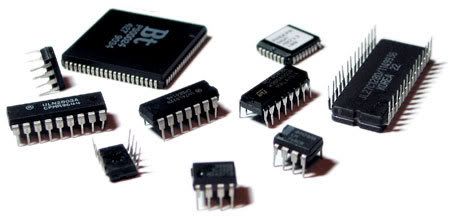
The Third Generation Computers were introduced in 1964. These computers used integrated circuit ( I.C's). These were much efficient than the earlier ones. These IC’s are popularly known as Chips. A single IC (Integrated Circuit) has many transistors, registers and capacitors built on a single thin slice of silicon. In this period the size of main memory reached 4 MB, of secondary storage reached 100 MB. Some of the computers developed during this period were IBM-360, ICL-1900, and VAX-750. Higher level language such as BASIC (Beginners All purpose Symbolic Instruction Code) was developed during this period.
These computers were highly reliable, small in size, cheaper, large memory and processing speed is very high.than the second generation computers. 3rd generation computers used Small Scale Integrated circuits (SCIC) and Medium Scale Integrated Circuits (MSIC).


IBM System-360

First Generation Computers


Vacuum Tubes


ENIAC (Electronic Numerical Integrator And Calculator)


UNIVAC (Universal Automatic Computer)


First Generation Computers:

The first electronic computer was developed in 1946 it is called Electronic Numerical Integrator And Calculator (ENIAC). It consists high speed vacuum tube, switching devices. In 1946 computer programming was mainly done in Machine language. 1951 Assembly language was invented. These computers were large in size and writing programs on them was difficult. First Generation computers are designed based on vacuum tube technology. The computers were large and accurate with high power requirement and large amount of heat generated.

ENIAC: It was the first electronic computer built in 1946. It was named Electronic Numerical Integrator and Calculator (ENIAC).

EDVAC: It stands for Electronic Discrete Variable Automatic Computer and was developed in 1950. The concept of storing data and instructions inside the computer was introduced here. This allowed much faster operation since the computer had rapid access to both data and instructions.

EDSAC: It stands for Electronic Delay Storage Automatic Computer and was developed by M.V. Wilkes at Cambridge University in 1949. The first and full size stored program computer, built at the University of Cambridge

UNIVAC: Dr. Presper Eckert and Dr. John Mauchly, the team that invented the UNIVAC.
Ecker and Mauchly produced it in 1951 by Universal Automatic Computer setup.


Recommended Articles

100 GB Free Backup

 
Contact Form